

How travel planning is shifting
Travel planning is changing, and quickly. The days of relying solely on established guidebooks and generic online recommendations are fading. A recent IMG Travel Outlook Survey pointed to a significant rise in the use of AI for trip planning in 2026, and it’s not just about finding the cheapest flight. People are actively seeking experiences that are different, that feel authentic, and that move beyond the typical tourist trail. I think a lot of travelers are feeling a bit fatigued by the sameness of popular destinations.
iMean.ai predicts that by 2026, social media will push even more people toward niche spots. But knowing a place is trending is only half the battle. Most of us want the local restaurant or the quiet viewpoint that hasn't been ruined by Instagram crowds yet. AI is actually good at this—it can scan thousands of data points to find the one spot that hasn't been overrun.
The promise of AI isn't about replacing travel agents or eliminating serendipity; it's about augmenting our ability to discover. It’s about getting beyond the curated lists and finding places that resonate with individual tastes. This isn't just about efficiency; it's about a fundamental shift in how we approach exploration – a move towards more personalized, meaningful, and less crowded travel.
Finding the real Alice Springs
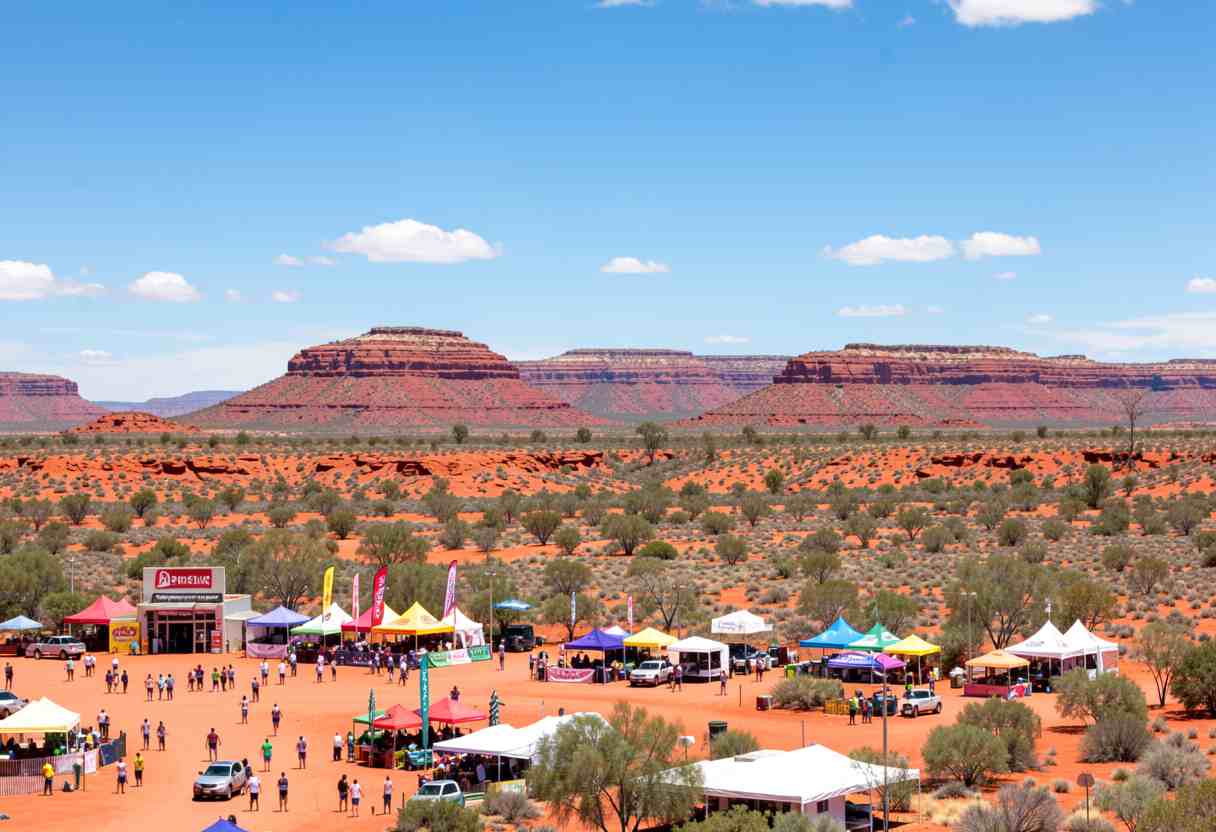
Alice Springs is often seen as a gateway to Uluru, but the town and its surrounding areas hold a wealth of lesser-known attractions. Many visitors stick to the well-trodden path of Emily and Jessie Gaps in the East MacDonnell Ranges, but beyond those lie vast stretches of rugged beauty and fascinating geological formations that are often overlooked. Current travel resources tend to focus on the highlights, leaving a lot to be discovered.
AI helps by scanning local blogs and resident posts to find where people actually go for a weekend walk or a quiet picnic. It can also look at geological surveys to find sites that aren't on any tourist map. I like the idea of a tool that checks rainfall patterns against bloom cycles to tell you exactly when the desert flowers will peak.
Indigenous art is another area where AI can help travelers go deeper. While the major galleries are well-known, numerous smaller art centers and independent artists operate throughout the region. AI could analyze artist profiles, exhibition listings, and even social media conversations to identify emerging talent and unique artistic styles. And for those interested in bush tucker, AI could help locate guided tours led by local Aboriginal people, providing an authentic and respectful cultural experience. Finding the best stargazing locations, away from town light pollution, is another area where AI, combined with astronomical data, could be invaluable.
Mainz: More Than Just Gutenberg
Mainz, Germany, is understandably famous for Johannes Gutenberg and his printing press. The Gutenberg Museum is a must-see, but the city offers so much more than just its printing history. Most visitors don't venture far beyond the main tourist areas, missing out on the city’s rich Roman past and its charming, often hidden, corners.
AI can help reveal Mainz’s Roman history beyond the well-preserved amphitheater). It could analyze historical maps, archaeological reports, and even building façades to identify remnants of Roman structures that are integrated into the modern cityscape. I’m particularly interested in whether AI could identify patterns in architectural styles to suggest hidden courtyards or overlooked monuments.
Mainz is also known for its Weinstuben – traditional wine taverns – many of which are tucked away in the old town’s narrow streets. AI could analyze local restaurant reviews, social media check-ins, and even historical records to identify these hidden gems, offering travelers a chance to experience authentic Mainz cuisine and hospitality. AI could even translate menus and provide historical context about the wines being served.
- Local wine taverns found through resident reviews rather than tourist guides.
- Roman ruins hidden in modern building basements identified via old city maps.
- Architectural Details: AI can identify unique architectural features and suggest hidden courtyards.
Mainz: Hidden Gems
- St. Stephan Church (St. Stephanskirche) - Often overshadowed by the Mainz Cathedral, this Gothic church boasts stunning stained-glass windows designed by Marc Chagall. It's a peaceful retreat with significant artistic value.
- Römisch-Germanisches Museum - While not entirely unknown, many visitors miss the depth of this museum’s collection showcasing the Roman history of Mainz, a former Roman provincial capital. User Rating: 4.5/5
- Kirchenpforten (Church Doors of Mainz) - A unique walking tour focusing on the intricately carved doors of Mainz’s historic churches. It's a fascinating way to discover hidden details and local history.
- Holzturm (Wood Tower) - This medieval tower, one of the few remaining parts of the old city fortifications, offers panoramic views of the city and the Rhine. User Rating: 4.2/5
- Eichgasse - A charming, narrow street lined with half-timbered houses, offering a glimpse into Mainz’s medieval past. It’s a great spot for photography and soaking up the atmosphere.
- Mainz Botanical Garden (Botanischer Garten Mainz) - A tranquil oasis showcasing a diverse collection of plants from around the world. It’s a perfect escape from the city bustle. User Rating: 4.0/5
- Schillerplatz & Fastnachtsbrunnen - A lively square known for its vibrant fountain depicting scenes from Mainz’s famous carnival (Fastnacht). It's a hub of local activity.
New tools for 2026
In 2026, we can expect a new generation of AI-powered travel tools that go far beyond simple flight and hotel booking. These tools will focus on curating personalized experiences and uncovering hidden attractions. We’re not talking about specific app names, as the landscape changes quickly, but rather the capabilities these tools will offer.
AI-powered itinerary generators will be able to prioritize off-the-beaten-path experiences, taking into account individual traveler preferences and interests. Instead of suggesting the same top ten attractions, these tools will create bespoke itineraries that focus on unique, lesser-known destinations. AI-driven translation tools will become even more sophisticated, capable of deciphering local dialects and providing real-time translation during conversations.
AI-assisted navigation will be crucial for exploring hidden attractions. These tools will be able to identify walkable routes to hidden gems, taking into account factors like safety, accessibility, and local traffic conditions. Furthermore, AI will learn from traveler feedback, continuously refining its recommendations and improving the overall travel experience. Imagine an AI that remembers you loved small, family-run restaurants and actively seeks them out on your next trip.
Perhaps the most exciting development is the potential for AI to create truly personalized travel guides. These guides won’t just list attractions; they’ll tell stories, provide historical context, and offer insights into local culture. They’ll be dynamic and interactive, adapting to your changing interests and preferences as you explore.
Beyond the Cities: Discovering Underrated Regions
The power of AI truly shines when it comes to discovering underrated regions that don't typically appear on tourist maps. Think beyond the well-known destinations and consider remote parts of the Australian Outback, lesser-visited areas of Germany’s wine regions (like the Ahr Valley), or emerging eco-tourism destinations in Southeast Asia.
AI can analyze large datasets – including satellite imagery, geological surveys, and social media activity – to identify areas with unique cultural or natural attractions. For example, it could identify previously unknown cave systems, hidden waterfalls, or remote villages with thriving artistic communities. The ability to analyze sentiment in social media posts can also reveal hidden gems – places that locals love but haven’t yet been discovered by the masses.
Consider the potential for AI to help travelers discover sustainable tourism opportunities in remote areas. By analyzing data on local economies, environmental conditions, and community needs, AI can identify destinations where tourism can have a positive impact. This is about more than just finding a beautiful beach; it’s about supporting local communities and preserving natural resources.
Ethical Considerations & Responsible AI Travel
As AI becomes more powerful in travel planning, it’s crucial to address the ethical implications. The potential for overtourism in previously undiscovered locations is a real concern. Suddenly shining a spotlight on a remote village could disrupt its culture and strain its resources.
We also need to consider the impact on local communities and the need to respect cultural sensitivities. AI should be used as a tool for discovery, not as a replacement for genuine cultural immersion. Travelers should be encouraged to engage with local communities in a respectful and responsible manner. I'm not sure how much control we have over this as individuals, but it’s a conversation we need to be having.
Responsible AI travel means using these tools thoughtfully and consciously, prioritizing sustainability, and supporting local economies. It means being mindful of our impact on the environment and respecting the cultures we encounter.
What is the biggest challenge you face when planning a trip to a lesser-known destination like Alice Springs, Mainz, or Latrobe?
As AI-powered travel tools continue to reshape how we explore the world, we want to hear from you. Whether you are venturing to the Australian Outback or a charming German city, what hurdle do you find most difficult to overcome? Vote below and share your experience in the comments!


No comments yet. Be the first to share your thoughts!