

Plan the route
Mainz is compact enough to walk, but the Rhine River and the surrounding vineyards pull visitors outward. Trying to see everything in one day usually means rushing through the historic center or missing the quiet charm of the riverfront. A sensible itinerary treats the city center as your anchor, then branches out to the riverbanks and nearby wine villages based on the time of day.
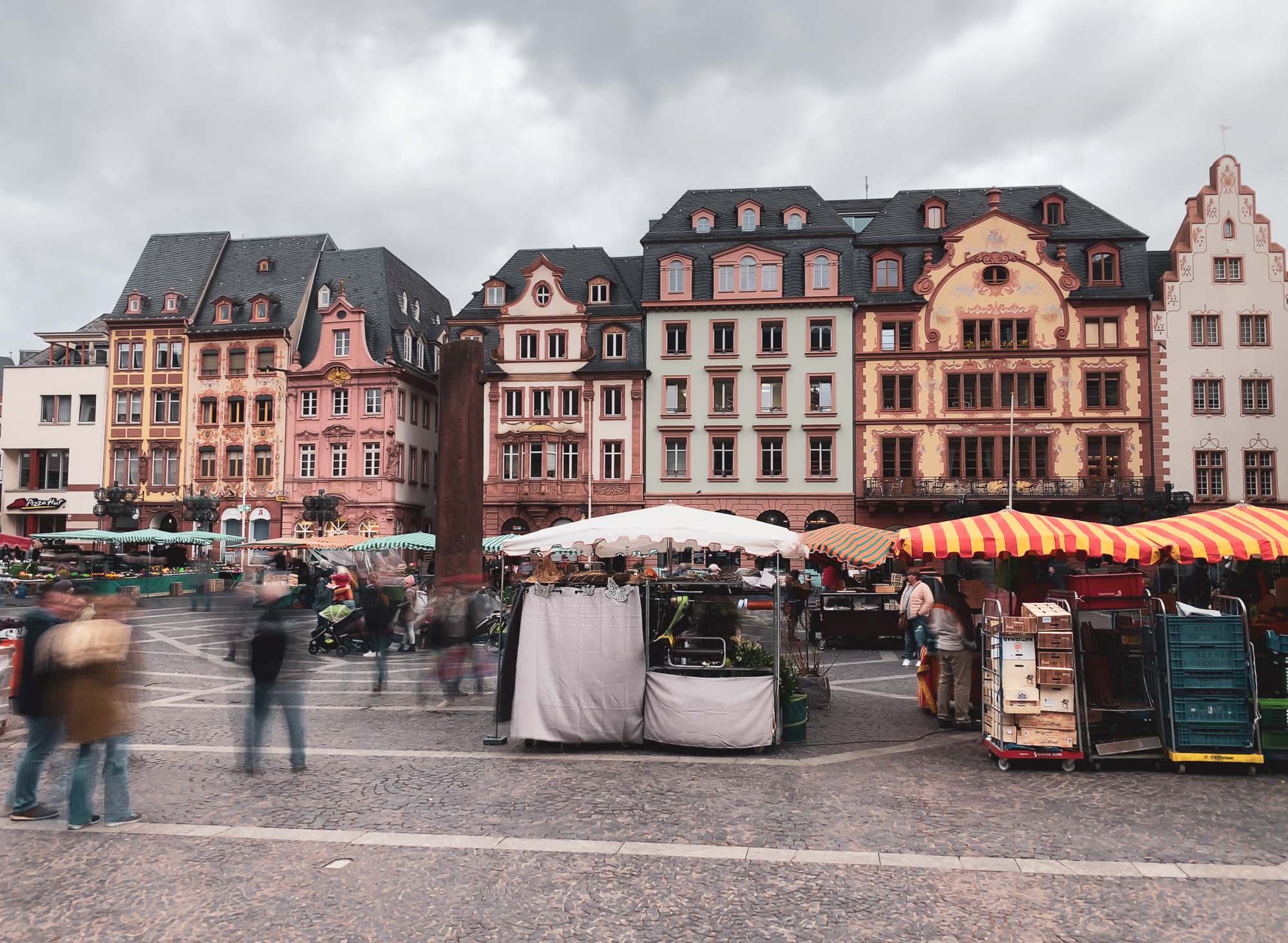
Start your morning in the Altstad (Old Town). This is where the major historic attractions cluster together, including the Mainz Cathedral and the Gutenberg Museum. Walking north from the cathedral toward the Rhine takes you through the Kirschgarten, a beautiful park that serves as the city’s living room. By mid-morning, the light is best for photography here, and the cafes are just opening.
After lunch, shift your focus to the water. The Mainz Rhine Promenade offers a distinct change of pace from the cobblestone streets. You can walk along the river, watch the cargo ships pass, or rent a bike for a short ride to the opposite bank. This is a good time to stop for an early dinner at one of the local Weinstuben (wine taverns) that line the riverfront, enjoying Riesling with a view of the water.
If you have an extra day or evening, extend your route into the surrounding Rheinhessen wine region. Mainz is the gateway to thousands of vineyards. A short bus or train ride takes you to villages like Dienheim or Gonsenheim, where you can taste local wines directly from the producers. This adds a rural dimension to your trip that balances the urban history of the city center.

Start at the Mainz Cathedral (Dom St. Martin). Walk through the pedestrian zone to the Gutenberg Museum, then stroll north to the Kirschgarten park. This cluster covers the city’s most significant historical sites within a 20-minute walk.

Move toward the river for lunch. Walk the Rhine Promenade (Rheinuferpromenade) to watch the river traffic. This flat, scenic route connects the city center to the ferry terminals and offers a relaxing contrast to the historic architecture.

Dine at a traditional Weinstube near the river or in the southern old town. Many taverns serve local Riesling and Hesse specialties like Handkäs mit Musik. Reserve a table if visiting on a weekend, as these spots fill quickly.
If time permits, take a short train or bus ride to nearby wine villages like Dienheim. The Rheinhessen region is Germany’s largest wine-growing area. Visit a local producer for a tasting to experience the rural side of the Rhine Valley.
Stops worth prioritizing
Mainz rewards travelers who focus on the compact historic center rather than spreading out across the wider Rhine Valley. The city’s core attractions cluster within a 20-minute walk, allowing you to prioritize high-impact sites without burning through your day. Start with the cathedral and the Gutenberg Museum, then move to the riverfront for views of the Rhine and the Main confluence. This sequence minimizes backtracking and keeps the momentum steady.
Some stops are worth the detour, while others can be skipped if time is tight. The Mainz State Museum offers excellent local history but requires a dedicated hour and a separate ticket. For most visitors, the free exterior views of the cathedral and the interactive exhibits at Gutenberg Museum provide a stronger return on investment. Use the comparison below to decide which stops fit your itinerary.
Timing and logistics
Getting around Mainz requires a mix of walking and public transit, especially if you are basing yourself near the Rhine. The city center is compact, but parking is scarce and expensive. Most hotels charge between €25 and €35 per night for garage access, and street parking is strictly enforced with limited zones. If you are driving, consider using the Park & Ride facilities on the city outskirts and taking the tram into the center. It is often cheaper and less stressful than hunting for a spot near the Gutenberg Museum or the Mainzer Dom.
Public transit is efficient and covers most tourist sites. The MVG (Mainzer Verkehrs-Gesellschaft) operates a network of trams and buses that run frequently. A single ticket costs €3.00, but if you plan to visit multiple attractions in a day, a day ticket for €7.50 is the better value. The tram lines are clearly marked, and the main stops are located near the central station (Hauptbahnhof) and the riverfront.
Reservations for restaurants are essential, particularly for dinner on weekends. Mainz has a vibrant dining scene, but tables fill up quickly. Book at least a few days in advance for popular spots in the Altstadt (Old Town). If you are visiting during the Mainz Music Summer or other major events, check the event calendar early, as these can impact hotel availability and restaurant hours.
<Map location="Mainz Hauptbahnhof, Mainz, Germany" zoom={15} label="Central transit hub" />
Common questions
Planning a trip to Mainz requires balancing the city’s compact historic core with the wider Rhine Valley. Most visitors find that two to three days are enough to see the cathedral, walk the riverfront, and sample local Riesling without feeling rushed.
Is Mainz worth visiting for one day?
A single day is tight but doable if you focus on the Altstadt (Old Town). Start at Mainz Cathedral to see the tomb of Johannes Gutenberg, then walk along the Rhine promenade toward the Gutenberg Museum. You can squeeze in a lunch of Riesling and regional cuisine before heading back to the train station or connecting to a Rhine cruise.
When are the best wine festivals in Mainz?
Mainz hosts two major wine events that define the local calendar. The Mainzer WeinUfer takes place in mid-May along the river, offering a relaxed atmosphere with local vintners. The larger Mainzer Weinmarkt runs from late August into early September in the city park, featuring traditional stalls, folk music, and a more festive crowd.
How do I get to Mainz from Frankfurt?
Mainz is extremely well-connected to Frankfurt. Regional trains (RE) run frequently between Frankfurt Hauptbahnhof and Mainz Hbf, taking only 15 to 20 minutes. The S-Bahn (S8 or S9) is also a reliable option, taking about 25 minutes. Taxis or rideshares are more expensive but offer direct door-to-door service.
Is Mainz a good base for Rhine Valley tours?
Yes. Mainz sits at the confluence of the Main and Rhine rivers, making it a logical hub. You can easily take day trips to Wiesbaden, Bingen, or Rüdesheim via train or bus. The city’s central location minimizes travel time compared to staying further north or south along the river.
No comments yet. Be the first to share your thoughts!